Right now, the typical small UK business is owed around £22,000 in invoices that should already have been paid. For a lot of firms that is more than a month of wages, sitting in a customer’s account instead of yours. The number that tracks this is debtor days, and most owners only check it after the cash has run low.
What debtor days actually measures
Debtor days is the average number of days your customers take to pay you. The formula is simple:
Debtor days = (trade debtors ÷ annual revenue) × 365
Trade debtors is the total your customers owe you at one moment. Say you turn over £600,000 a year and customers owe you £74,000 today. That works out at (74,000 ÷ 600,000) × 365 = 45 days. If your invoices say 30 days, you are being paid roughly two weeks late, every time, on average.
What the number is telling you
A rising figure means cash is coming in slower than you are doing the work. You are funding your customers’ businesses out of your own bank balance. Left alone, it forces you into your overdraft to cover wages and suppliers you have already paid.
A falling figure means the opposite. Money is landing sooner, and working capital frees up without you selling a single extra thing. The effect is bigger than most people expect. On a £600,000 business, cutting debtor days by seven releases roughly £11,500 of cash you can actually use.
How to track it properly
- Pull two numbers: your trade debtors balance and your rolling annual revenue.
- Calculate it on the same day every month. A single reading tells you little; the trend tells you everything.
- Compare it against three things: your own payment terms, last month, and the same month last year.
- Read it next to your aged debtor report, which breaks debt down by how overdue it is.
- Track concentration. In most firms, five to ten accounts hold the bulk of the overdue money.
What to do when it climbs
Three causes drive almost every rise. Each needs a different fix.
First, slow or sloppy invoicing. If you bill a week after the job, you are a quarter of a 30-day term down before the clock starts. Invoice the day work completes, and check the details, because one wrong purchase order number buys the customer another month.
Second, no collection rhythm. Many firms send the first chaser at 14 days overdue. Move it to day one, even as an automated email. A polite reminder on the morning a payment is late changes behaviour without damaging the relationship.
Third, the wrong terms for the wrong customers. Credit-check new accounts before you extend terms. Tighten terms for repeat late payers. And use your legal right to charge statutory interest, currently 8% above the Bank of England base rate, on overdue commercial invoices. From 2025 the government is also forcing large firms onto shorter payment caps, so the pressure is shifting your way.
One thing to do this week
Open your aged debtor report and find the three oldest unpaid invoices. Phone each customer, do not email, and ask one question: what date will this be paid? Write the date down. A spoken commitment gets paid far more often than a silent overdue invoice. Do all three before Friday.
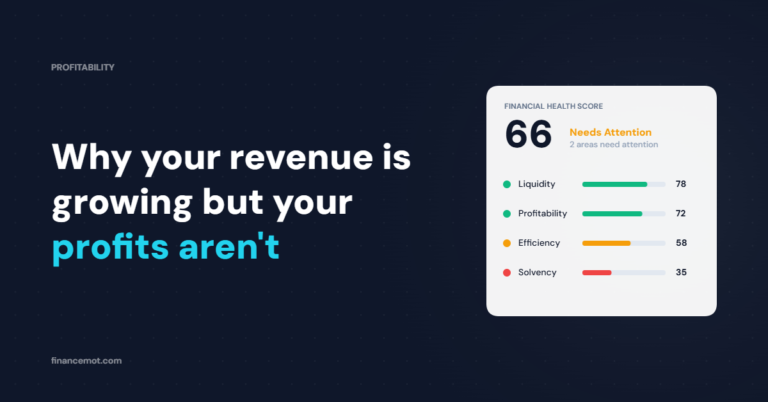
FinanceMOT tracks debtor days inside the Efficiency pillar, one of the four it scores from 0 to 100. It reads the figure from your accounts, shows you the trend, and flags when collection is slipping behind your terms. Your accountant shows you the number. FinanceMOT tells you which customers to call first and what it is worth in released cash.