If you are a sole trader or a landlord earning over £50,000, the way you report income to HMRC changed on 6 April 2026. Plenty of businesses have not noticed. They still keep a paper cashbook, the running list of money in and money out, and plan to type the totals into one annual return like always. That route is closing.
The problem most SMEs face
HMRC estimates more than 860,000 sole traders and landlords must use Making Tax Digital for Income Tax from April 2026. The change applies to self-employed people and landlords, not limited companies, which follow a separate timetable. Making Tax Digital, or MTD, means keeping digital records and sending HMRC updates through approved software instead of one yearly form.
Two mistakes show up again and again. The first is assuming it does not apply to you. The second is panic, because many people think quarterly updates mean paying tax four times a year. They do not. An update is a summary, not a bill. Spreading the work across the year is the point, not extra tax.
The threshold trips people up too. Qualifying income is your gross turnover, the total before expenses, not your profit. It combines self-employment and rental income. A freelancer turning over £45,000 with £6,000 of rent sits at £51,000, over the line, even though neither source crosses it alone.
What good looks like
A well-run business records every sale and cost digitally as it happens, not in a year-end scramble. The owner uses software on HMRC’s recognised list, reconciles the bank account each month so the records match reality, and knows the numbers before the deadline rather than after. They also keep digital copies of receipts and match each one to a transaction, so nothing is guessed at year end. When the bank feed and the records agree, the quarterly update takes minutes rather than a weekend. Paper records on their own no longer meet the rules.
A practical step-by-step
- Check your qualifying income for the 2024 to 2025 tax year. Gross income over £50,000 means you start on 6 April 2026.
- Choose software from HMRC’s compatible software list. Free tools exist, but check they handle quarterly updates and the final declaration, not just invoices.
- Sign up for MTD for Income Tax on gov.uk, or ask your accountant to do it for you.
- Record income and expenses digitally from 6 April. If you prefer spreadsheets, you need bridging software that links them to HMRC.
- Send your first quarterly update by 7 August 2026, then again in November, February and May.
- File one Final Declaration by 31 January 2027. It replaces the old Self Assessment return.
What to watch out for
The penalty soft landing is real but limited. Anyone joining in April 2026 gets no penalty points for late quarterly updates for the first 12 months. After that, points build up, and four points brings a £200 penalty. Treat the grace period as practice, not a holiday.
Watch the thresholds drop. The limit falls to £30,000 from April 2027 and £20,000 from April 2028, so a business that escapes this year may be caught next year.
Do not leave the software until the last week. Moving a year of paper records into a digital system days before your first update is how mistakes happen. Give yourself a few weeks to learn the tools and fix any gaps before the deadline counts.
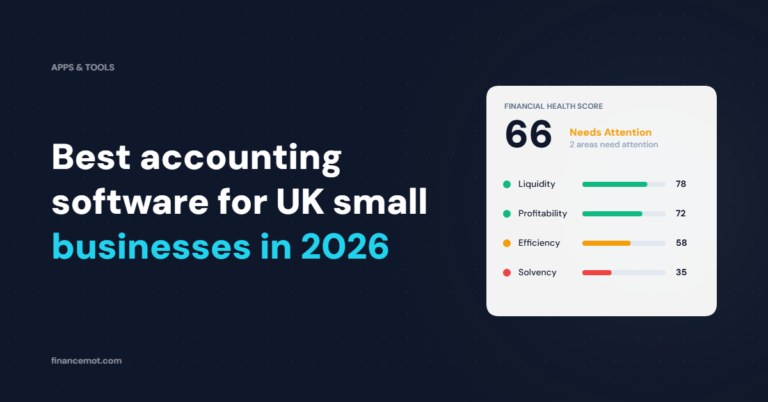
Once your records are digital and updated every quarter, you have clean, current numbers sitting there four times a year instead of once. FinanceMOT reads those numbers and turns them into a financial health score out of 100, with KPI signals across liquidity, profitability, efficiency and solvency, and a plain executive summary you can act on. Your accountant shows you the numbers. FinanceMOT tells you what to do about them.
Run your free financial MOT at financemot.com