Most people who run a UK limited company became a director by signing a form, not by reading the law. You ticked a box at Companies House, and overnight you took on legal duties that sit in the Companies Act 2006. Few founders ever read them. That gap is where the trouble starts.
Why this matters at SME scale
This is not abstract. In 2024-25 the Insolvency Service disqualified 1,036 directors, with bans averaging eight years. A disqualified director cannot run or even help run a company. Many of those people were not fraudsters. They were owners who kept poor records, ignored warning signs, or carried on trading when they should have stopped.
In a 50-person business with a finance team, someone usually catches these risks. In a 10-person business where the founder is also the bookkeeper, nobody does. The law makes no allowance for being busy.
What it actually involves in practice
The Companies Act 2006 sets out seven general duties every director owes the company. In plain English they are: follow the company’s own rules (its articles of association), act to promote the success of the company, use your own judgement, apply reasonable care and skill, avoid conflicts of interest, refuse benefits from third parties, and declare any personal interest in a deal the company is doing.
On top of those sit hard filing duties. You must keep proper accounting records, file annual accounts and a confirmation statement (a yearly snapshot of company details) with Companies House, register the company for the right taxes, and tell other shareholders if you stand to gain personally from a transaction.
One duty catches owner-managers out more than any other: the shift that happens when the company is near insolvency. The moment the business cannot pay its debts, your duty stops being to the shareholders and starts being to the creditors. Carry on racking up debts past that point and you risk a wrongful trading claim and personal liability.
A simple checklist
- File your annual accounts and confirmation statement before the deadline, every year, without a reminder from a penalty letter.
- Keep business and personal money in separate accounts, with no informal “I’ll pay it back” loans.
- Record every board decision in writing, even if the board is just you and one co-founder.
- Declare any interest you have in a supplier or contract before the company signs.
- Check monthly whether the company can pay its debts as they fall due.
- Read your own articles of association at least once. Most directors never have.
- Keep three years of accounting records, minimum, and know where they are.
What good looks like
Picture a 14-person design agency run by two founders. They hold a 30-minute board meeting on the first Monday of every month. One of them types five lines of minutes: decisions made, money committed, anything that changed. When a founder’s brother pitched to become a supplier, they noted the connection and got a second quote before signing. None of this is heavy. It took an hour a month and a habit. If that company ever faced a dispute or an insolvency review, the paper trail would speak for itself.
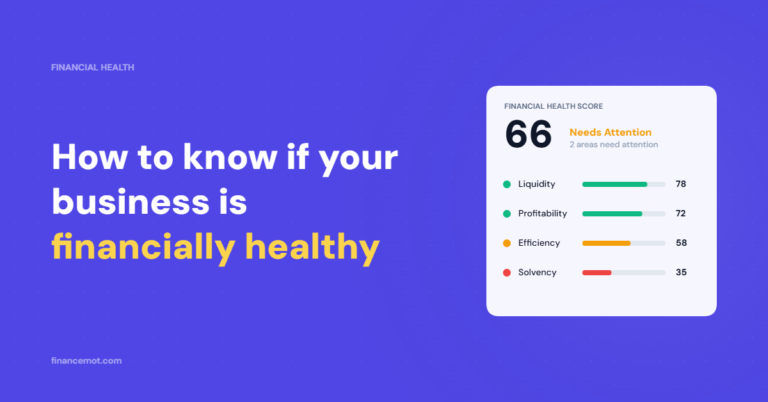
Good governance depends on knowing the numbers behind that “can we pay our debts” question, every month, not once a year at accounts time. FinanceMOT turns your figures into a financial health score across liquidity, profitability, efficiency and solvency, so the solvency signal that matters legally is one you can actually see. The downloadable management report gives you a record of where the business stood at each month end. Your accountant shows you the numbers. FinanceMOT tells you what to do about them.