Most SME owners do not have a CFO. They have a bookkeeper who records what happened, an accountant who files the year-end, and a quiet worry that nobody is reading the numbers in between. That gap is where the big decisions get made on gut feel. A fractional CFO fills it, without the salary of a full-time hire.
The phrase sounds like jargon. It is not. A fractional CFO is an experienced finance director who works for you one to three days a week on a fixed monthly fee, rather than full time. You get the senior thinking. You skip the six-figure cost.
Why this matters at SME scale
Here is the uncomfortable bit. In a survey of 1,000 UK SME decision makers, a third could not correctly define cash flow, and 82% had already hit cash flow trouble.
That combination is how profitable businesses still run out of money. Sales look healthy. The bank balance quietly drains because nobody is watching debtor days, stock, or the timing of a VAT bill. A good finance lead spots that months early. Without one, you find out when a payment bounces.
At 5 or 10 people, your accountant and a spreadsheet cope. Somewhere past the first million in revenue the questions get harder: should we hire, can we fund this order, is this customer actually profitable. Those are CFO questions, not bookkeeping ones.
What it actually involves in practice
Strip away the title and a fractional CFO does a handful of concrete things.
They produce monthly management accounts that go past a profit and loss summary: margin by product or service, cash headroom, debtor days, and actual results against forecast. They build a rolling cash flow forecast and test real decisions against it, like a price rise or a new salary. They sit in your board or leadership meeting and explain what the numbers mean. They get you ready for a lender or investor before you need the money.
What they are not: a bookkeeper, or your year-end accountant. Your accountant shows you what already happened and files it. A fractional CFO tells you what to do next. The legal duties stay with you either way, because directors carry a personal responsibility to promote the success of the company under the Companies Act 2006.
Signals you are ready for one
Tick these off honestly. Three or more, and it is time to talk to someone.
- You cannot say, today, what your cash position will be in three months.
- You are planning to raise money or take on a bank facility.
- You are guessing at pricing rather than knowing your margin by line.
- Headcount is growing and payroll is now your biggest monthly bet.
- Board or investor reporting takes you days and still looks thin.
- You make big calls on instinct because the numbers arrive too late.
- A new contract could break your cash flow and you are not sure.
What good looks like
Picture a 28-person creative agency turning over about £3 million. The founder was strong on winning work, weak on the numbers. A fractional CFO came in two days a month. Within a quarter there was a one-page dashboard, a 13-week cash forecast, and a clear finding that one big client was barely breaking even after rework. They repriced that account, dropped two loss-making services, and walked into a funding conversation with clean figures. No full-time hire. A few thousand pounds a month, not a £120,000 salary.
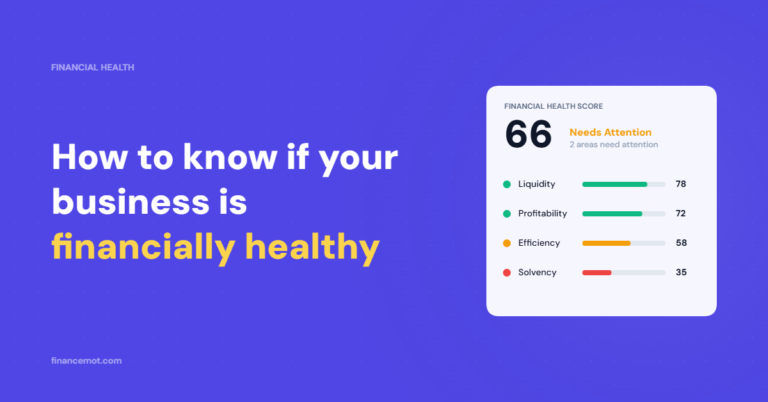
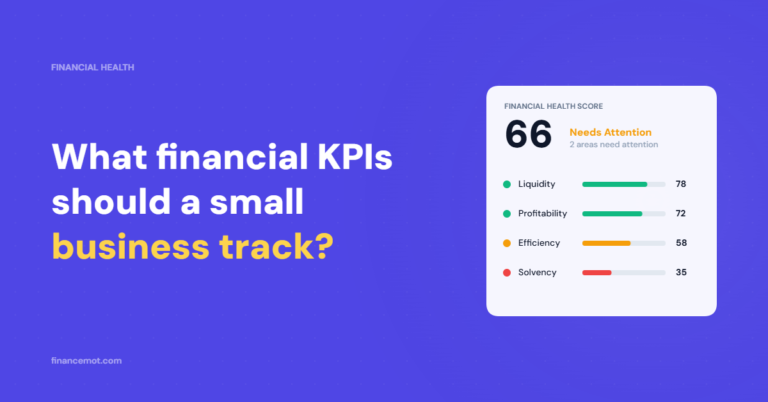
A fractional CFO’s first job is working out where the business actually stands, and FinanceMOT runs that same diagnostic in minutes, scoring your financial health from 0 to 100 across liquidity, profitability, efficiency, and solvency. It flags the KPI signals that need attention and hands you a downloadable management report and executive summary to act on. Your accountant shows you the numbers. FinanceMOT tells you what to do about them.
Try FinanceMOT free at financemot.com, no card needed